Maryland Rental Property Winter Checklist: What Owners Should Check Before Temperatures Drop
A furnace that stops working during a cold snap can quickly become more than a maintenance expense. It can leave residents without heat, require emergency repairs, and expose problems that went unnoticed during warmer months.
For owners of rental properties in Baltimore, Dundalk, Essex, Parkville, and Glen Burnie, fall is a valuable window to prepare. A clear winter maintenance plan helps protect the property, support residents, and reduce avoidable disruptions.
Here are six areas Maryland landlords should review before freezing weather arrives.
1. Check the Heating System Before an Emergency
Turning on the thermostat does not confirm that the entire home heats properly. Uneven temperatures, short cycling, unusual noises, and recurring shutdowns deserve attention before colder weather increases demand.
Schedule a qualified HVAC professional to inspect the system, and review:
Filter condition and replacement needs.
Thermostat operation.
Airflow and accessible vents.
Unresolved heating complaints.
Recommended repairs and service history.
Baltimore City owners should also review local heating requirements. The city’s heating facilities code specifies an October 1–April 30 heat-supply period and temperature standards. Requirements vary by jurisdiction, so owners in Baltimore County or Anne Arundel County should check the rules applicable to their property.
2. Identify Plumbing Areas Vulnerable to Freezing
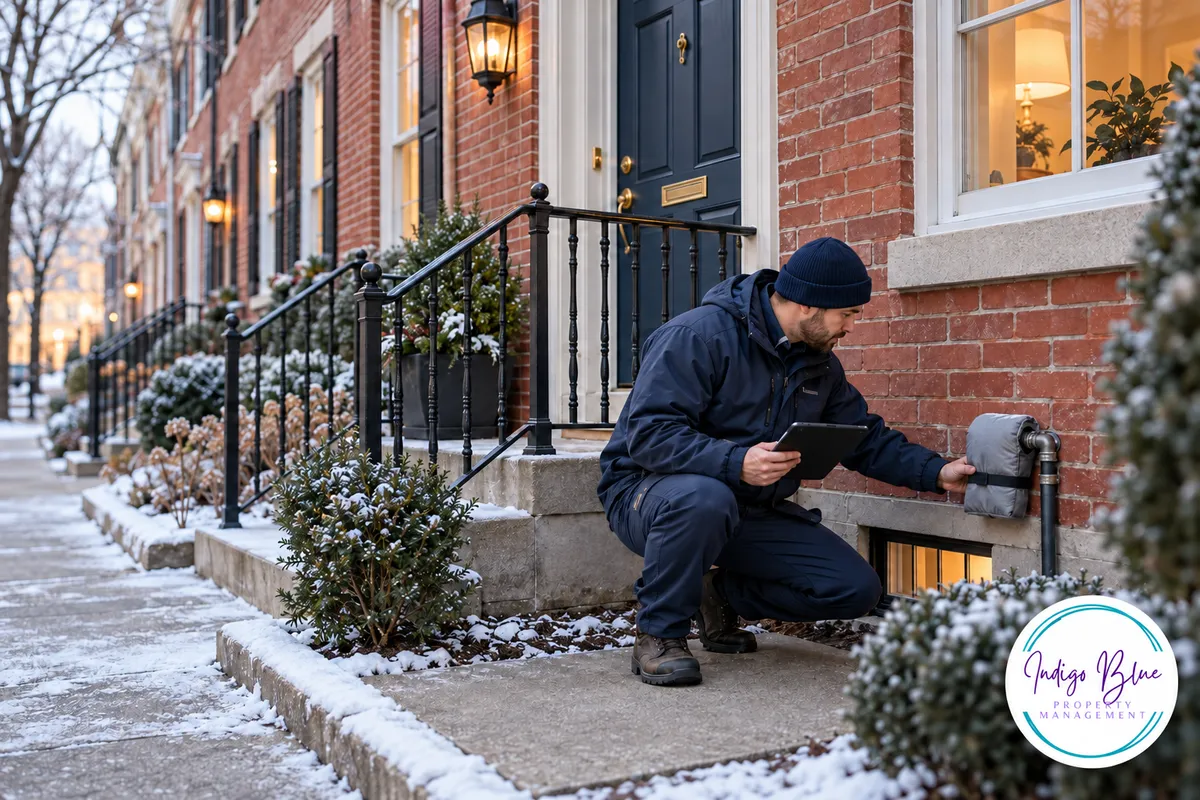
Winter rental property maintenance should include plumbing in basements, crawl spaces, exterior walls, and other areas exposed to cold.
Ask a qualified contractor to identify vulnerable pipes, recommend insulation, and determine how exterior faucets should be prepared. Make sure the main water shutoff is accessible and its location is documented.
Residents should know how to report a sudden loss of water, visible leaks, or unusually low water pressure promptly.
FEMA’s winter weather preparation guidance recommends protecting pipes and improving insulation, caulking, and weather stripping before winter conditions arrive.
3. Give Vacant Rental Properties a Separate Plan
A vacant Baltimore rental property still needs oversight. A small leak or heating failure can go unnoticed when nobody is living there.
Before a vacancy, renovation, or tenant turnover, establish:
Who will monitor the property and how often.
Who is responsible for utility service.
How heating problems or leaks will be detected.
Whether professional winterization is appropriate.
What vacancy conditions appear in the insurance policy.
Avoid assuming that a home is protected simply because the doors are locked. Utility continuity, inspections, and a documented response plan deserve the same attention as marketing the vacancy.
4. Inspect Gutters, Drainage, and Walking Surfaces
A winter inspection should cover more than the inside of the home.
Check gutters and downspouts for blockages, look for water collecting near the foundation, and inspect steps, railings, exterior lighting, and walkways. Small drainage problems can become more disruptive when temperatures drop.
For snow and ice, confirm who will arrange service and review applicable local requirements. A lease provision should not be treated as a substitute for understanding the owner’s responsibilities.
5. Send Residents Clear Winter Instructions
Good tenant communication is part of preventive property maintenance.
Send a short seasonal reminder explaining:
How to submit routine maintenance requests.
How to report urgent heating or plumbing problems.
Which contact to use after hours.
Why vents and heating equipment must remain unobstructed.
How maintenance access will be coordinated.
Include a reminder to report malfunctioning smoke or carbon monoxide alarms immediately. FEMA also recommends testing alarms and warns against using a gas stove or oven to heat a home.
6. Budget for Repairs and Keep Records
A checklist becomes useful when someone follows through.
Keep inspection photos, contractor recommendations, repair approvals, invoices, and resident communications together. Separate urgent repairs from planned improvements, and maintain an owner reserve appropriate to the property’s needs.
For Maryland rental property owners, this documentation makes it easier to track recurring problems and decide whether equipment needs another repair or a replacement evaluation.
How Professional Property Management Supports Winter Preparation
Seasonal maintenance involves scheduling vendors, arranging access, communicating with residents, reviewing estimates, and confirming completion.
Indigo Blue Property Management helps Maryland rental owners coordinate property maintenance and day-to-day operations. Whether you own a Baltimore rowhome, a Dundalk rental house, or an investment property in Glen Burnie, a consistent maintenance process helps you address issues before they interrupt your rental operations.
Need help preparing your Maryland rental property for winter? Connect with Indigo Blue Property Management to discuss your property’s needs.
This article provides general educational information, not legal advice. Requirements vary by location and property type.